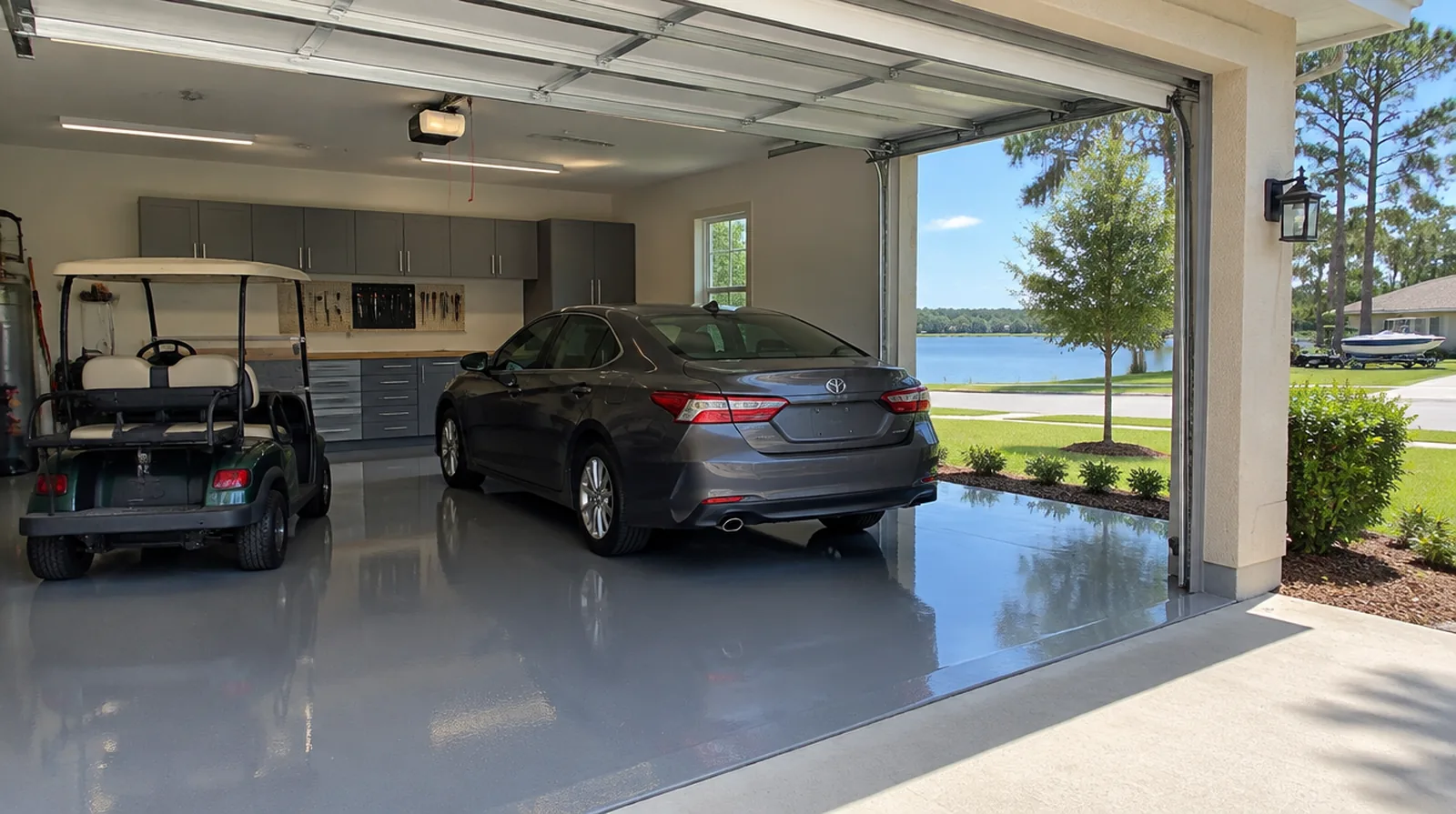
New slab or old slab, the floor needs help
People are sometimes surprised that a brand-new garage needs any work before coating. Builders finish garage slabs with a smooth trowel and often spray a curing compound on top. That smooth, sealed surface is exactly what a coating cannot grip. Older slabs have the opposite problem: years of oil, rust from well water, paint spills, patches and a soft, dusty top layer. Both need the same first step, which is diamond grinding. Grinding removes whatever sits on top, exposes clean, sound concrete and creates a texture that a primer can soak into.
How we prepare your floor
We use heavy planetary grinders with vacuum dust collection, so your house and the neighbors do not end up coated in concrete powder. Edges along walls and steps are ground with handheld tools. After grinding, we inspect every crack. Hairline shrinkage cracks are filled. Wider cracks get chased with a saw and filled with a repair compound. Pitted areas where water or chemicals have eaten into the surface are rebuilt and leveled. Control joints are either filled for a smooth look or left open so the slab can move. In homes with a step down into the garage, we finish the step face too.
Layers that each do a job
Penetrating primer
A thin primer wicks into the ground concrete and creates a mechanical and chemical bond. On slabs that test high for moisture, a vapor-tolerant primer goes down instead.
Color coat
A thicker pigmented layer builds the body of the floor. Grays and tans are common, and white or light gray brightens dim garages. Flakes can be added here for texture.
Wear layer
A clear topcoat protects against abrasion, chemicals and sun. We favor polyaspartic and urethane topcoats because they stay clear in daylight and handle hot tires better than plain epoxy.
Hot tires and summer driving
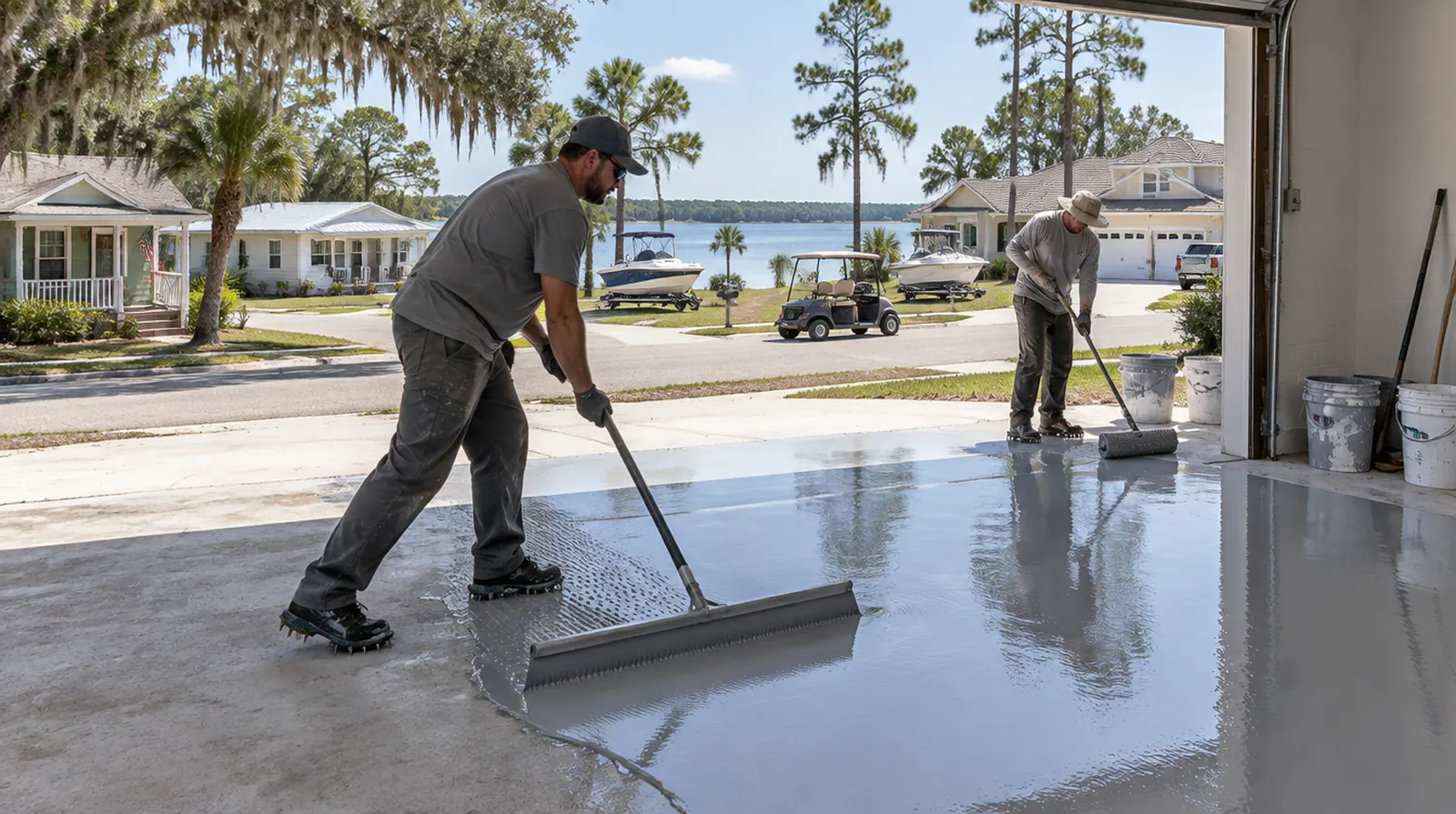
When you drive home on an August afternoon, your tires can be hot enough to soften weak coatings. As the car sits, the rubber grips; when it backs out, the coating comes with it. A ground surface, real film thickness and a hard topcoat stop that from happening. We see a lot of kit floors with tire-shaped holes, and the fix is always better preparation and better materials.
Planning around your schedule
The garage must be emptied before we start. Most two-car floors take one or two days. You can usually walk on the surface the next day, put things back after another day and drive on it after the recommended cure, about 72 hours for full epoxy systems or sooner for polyaspartic. We schedule early-morning starts in summer so materials are applied before the garage heats up.
Keeping it clean
A leaf blower or soft broom clears sand fast. For deeper cleaning, use a mop or soft deck brush with a gentle cleaner and rinse well. Skip harsh degreasers and acids. Place pads under kickstands and jack stands, and wipe battery acid or brake fluid right away.
Questions
Can you coat a garage with a carport extension?
Yes. Covered areas can be coated, but we use UV-stable topcoats and slip resistance where rain reaches the surface.
What if my slab has well-water rust stains?
Grinding removes most surface rust. Deeper stains can be treated before coating.
How long will the floor last?
With normal household use, many years, with the option to refresh the topcoat later.
Schedule a garage estimate
Contact us to set up a visit, or look at flake flooring for a textured option.
We also offer matching coatings for the steps into the house and any storage closets off the garage.
Get a garage floor quote
Call (689) 210-6784 for a free estimate.