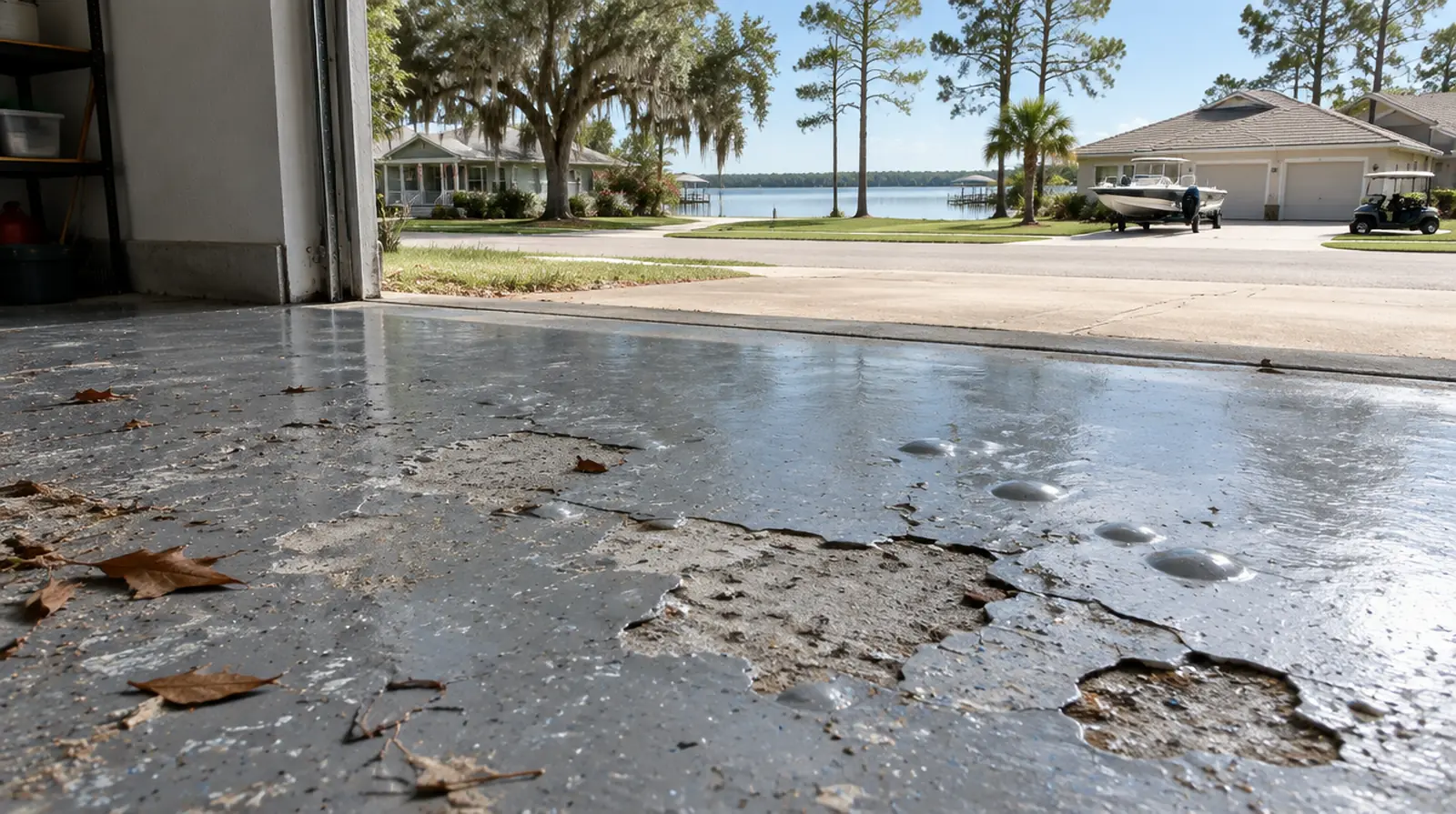
Reading a failed floor
Every failed floor tells a story. Peeling in the tire paths usually means poor preparation and a thin coating that could not take hot tires. Bubbles and blisters scattered across the floor often point to moisture pushing up through the slab. A floor that flakes everywhere may have been coated over old paint or sealer. Yellowing near the door means an epoxy topcoat was exposed to sun. Dull, scratched floors simply need a fresh topcoat. We look at the pattern, test adhesion and measure moisture so we can explain what happened before recommending a fix.
Repair choices
Patch and blend
For isolated damage on a well-bonded floor, we grind out the bad area, rebuild the surface and coat it to blend. This works best on flake floors, where texture hides transitions.
Scuff and recoat
When the base is solid but the surface is worn, we sand the floor and apply a fresh topcoat. This restores shine and protection quickly.
Strip and start over
When adhesion has failed across the floor, patching only delays the next failure. We grind everything off, repair the concrete and install a new system built to last.
Moisture-related failures
In low-lying areas near the lakes, moisture is a common culprit. If testing confirms vapor is the problem, we use a moisture-mitigating primer under the new coating. In some cases, we may suggest a breathable finish instead of a full film coating.
Tire marks and discoloration
Dark tire marks that will not wash off come from chemicals in tires migrating into soft topcoats. Replacing the topcoat with a harder, chemical-resistant product stops it. Yellowed floors get a UV-stable topcoat, sometimes with a new color coat beneath.
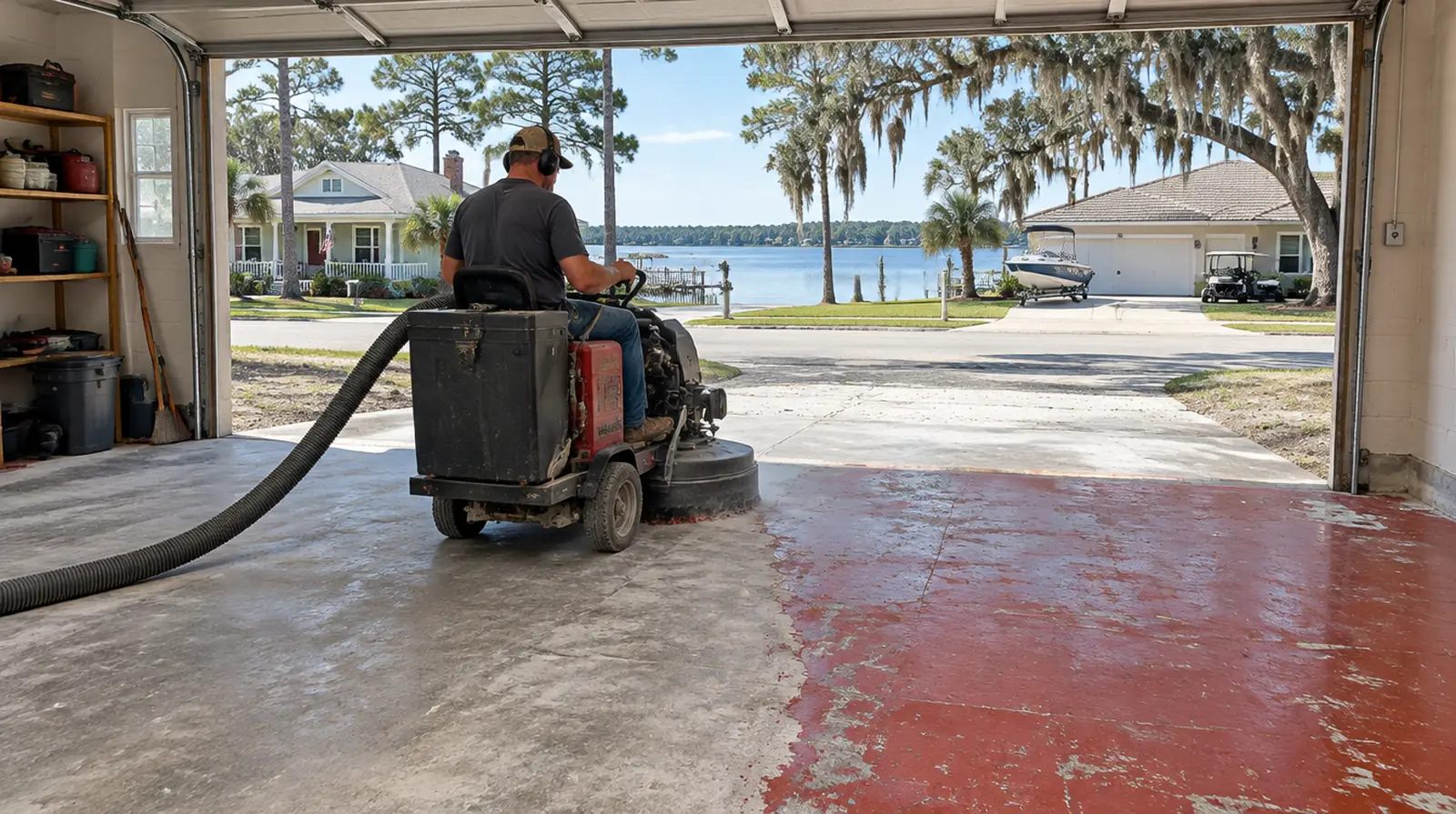
Concrete damage under the coating
Sometimes the slab itself is cracked, chipped or uneven. We repair cracks, rebuild spalled edges at the garage door and fill low areas before recoating, so the finished floor is smooth and sound.
After a flood or storm
Storms can push water and debris into garages. Most well-bonded coatings survive, but scratches, stains or lifted edges may need repair. We clean, assess and recoat affected areas.
Avoiding repeat problems
Good preparation and the right materials prevent most failures. We also explain simple care habits: sweep sand, clean spills quickly and use pads under kickstands and jack stands.
Questions
Can a kit floor be saved?
Usually not. Most need full removal and a professional system.
Will the patch match exactly?
Flake floors blend well. Solid colors can be harder to match perfectly. We talk through that before starting.
How long do repairs take?
Recoats take about a day. Full removal and a new floor take one to two days.
Get help with your floor
Contact us with photos of the damage, or read about new garage floors.
What a repair estimate covers
During the visit, we tap the coating to find hollow spots, press tape on suspect areas to check adhesion, and test the slab for moisture in several places. We look at how the floor was installed, whether there is old paint or sealer underneath, and how the damage lines up with tire paths, doorways or downspouts. Then we explain what we found in plain terms and give options with prices, from a simple recoat to full removal. If you have the original product name or installation date, bring that along. It helps us predict how the old coating will react to sanding and new materials, and keeps the repair from introducing new problems.
Get a repair estimate
Call (689) 210-6784 for a free estimate.