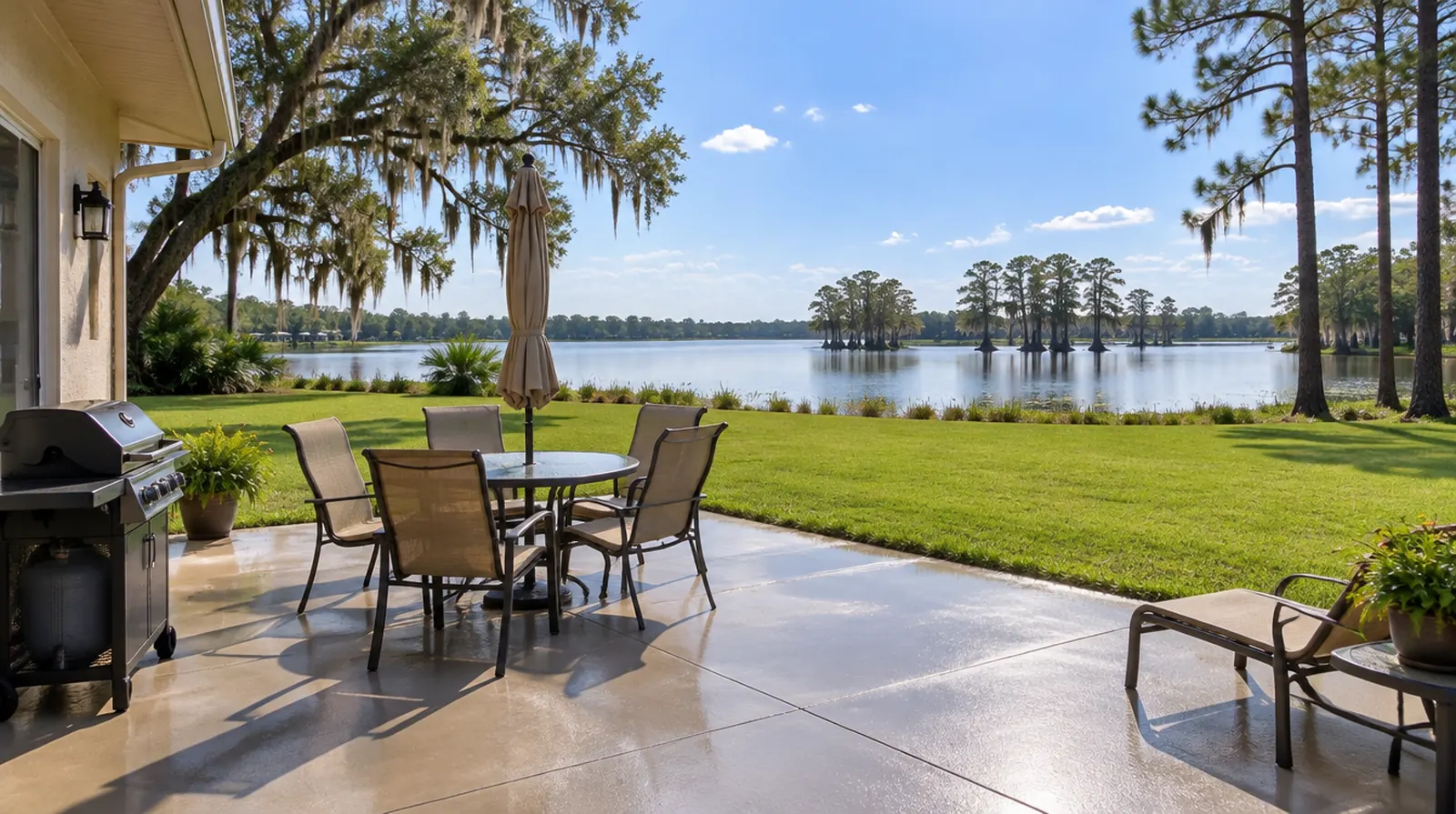
Why sealing matters near the water
Outdoor concrete in a lakeside town lives in a damp world. Morning dew, frequent rain, shade from big oaks and runoff from lawns all keep surfaces wet. That invites algae, mildew and black staining. Sprinklers fed by well water leave orange rust marks. Boat ramps and dock approaches get algae slicks. Unsealed concrete soaks up water and stains, and over time the surface wears and pits. Sealing reduces absorption, slows growth and makes the surface easier to clean.
Sealers we use
Penetrating repellents
Silane and siloxane sealers soak into the concrete and repel water without changing the appearance much. They do not create a film, so they do not peel and do not add slipperiness. They are our usual choice for driveways, walks and dock approaches.
Acrylic sealers
Acrylics form a thin film that brings out color and adds sheen. They are common on decorative and painted concrete. They need recoating every few years and must be applied thinly to avoid slick surfaces.
High-performance films
Urethane and polyaspartic sealers create tougher surfaces for patios and porches that see heavy use or stains. We add grit for traction.
Preparation
Sealers lock in whatever is on the surface, so cleaning comes first. We pressure wash, treat algae and mildew and remove rust stains when possible. Then the concrete must dry fully, which takes careful timing during the wet season.
Pool decks
Pool decks need sealers that tolerate chlorine or salt, stay cool and keep traction. We clean, repair cracks, refresh color when needed and seal with slip-resistant additives.
Docks and ramps
Concrete approaches to docks and boat ramps grow algae quickly. Sealing slows growth and makes cleaning easier. We use products that do not create slippery films on sloped surfaces.
Patios and walks
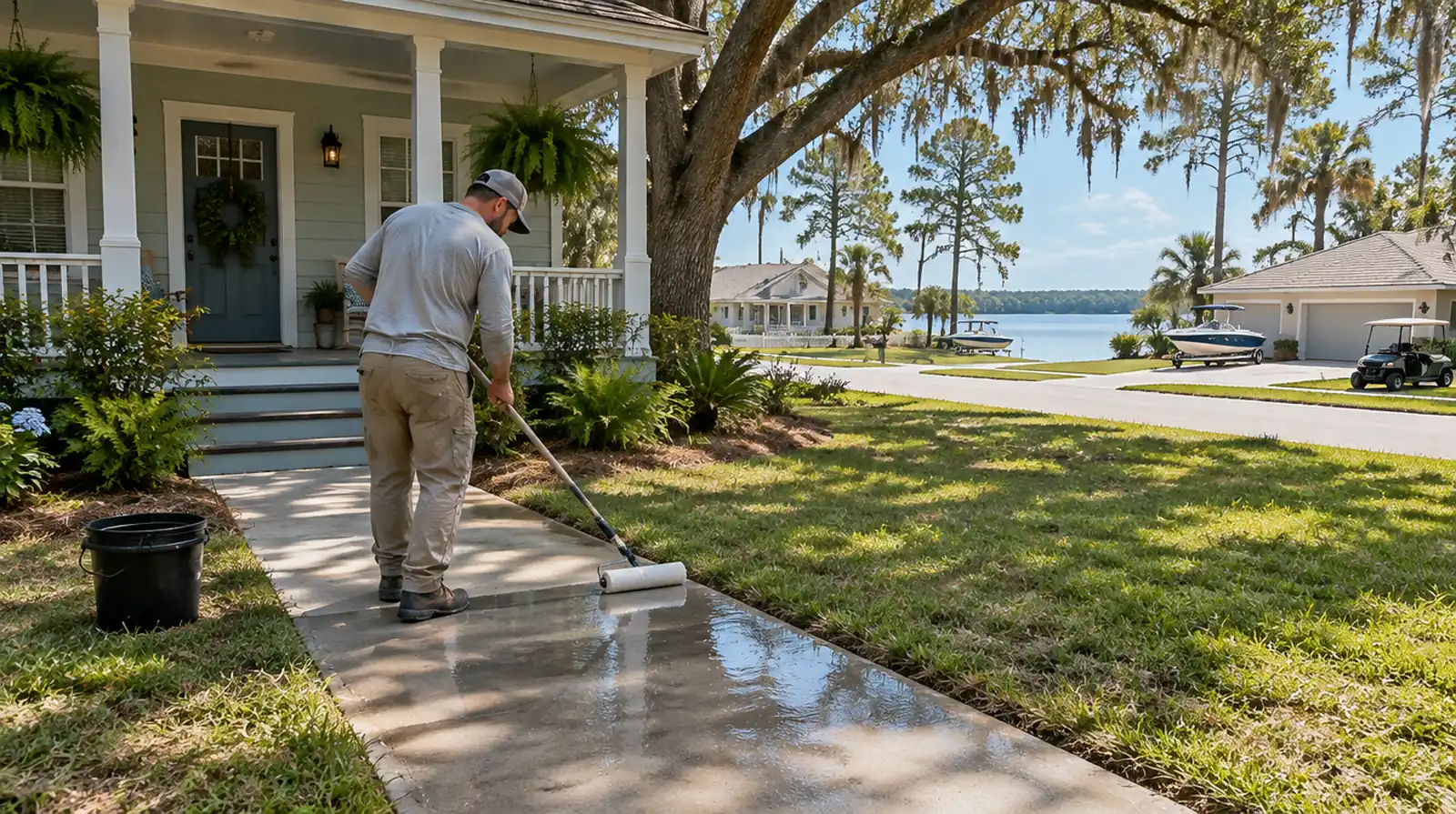
Front walks to older cottages and patios behind newer homes both benefit from sealing. It keeps them cleaner and helps them last.
How long sealers last
Penetrating sealers often last several years. Acrylic films in direct sun typically need refreshing every two or three years. We set expectations based on your surface and exposure.
Questions
Will sealing stop algae completely?
It slows growth and makes cleaning easier, but shady, wet areas still need occasional washing.
Can you remove orange rust stains?
Many can be lightened or removed with specialized cleaners.
How soon can I walk on it?
Usually within a few hours.
Protect your concrete
Contact us for a quote, or see driveway coating for worn driveways.
Sealing schedules that fit Florida weather
Penetrating sealers need dry concrete, and that can be hard to find in the rainy months. We usually aim for a run of dry days and start after the morning dew has burned off. In the dry season, from late fall through spring, scheduling is much easier and sealers soak in deeper. If you want to tackle several surfaces at once, like the driveway, the front walk, the pool deck and the dock approach, we can plan them in a single visit and give you one price for the whole property. We also leave written care notes so you know when to rinse, when to treat algae and when the next coat is due.
Rust and mineral stains
Well water used for irrigation carries iron that leaves orange streaks along walks and driveways. Before sealing, we test a small spot with a rust remover made for concrete, then treat the full area. Redirecting sprinkler heads or adding a filter on the irrigation line keeps new stains from forming after the sealer goes down.
Get a sealing quote
Call (689) 210-6784 for a free estimate.